

Reimagining Welfare Delivery: How Aadhaar-Linked Transfers are Shaping India’s Social Protection System
03
Oct
Posted by: Raj Das
Category:
Governance, Impact
No Comments
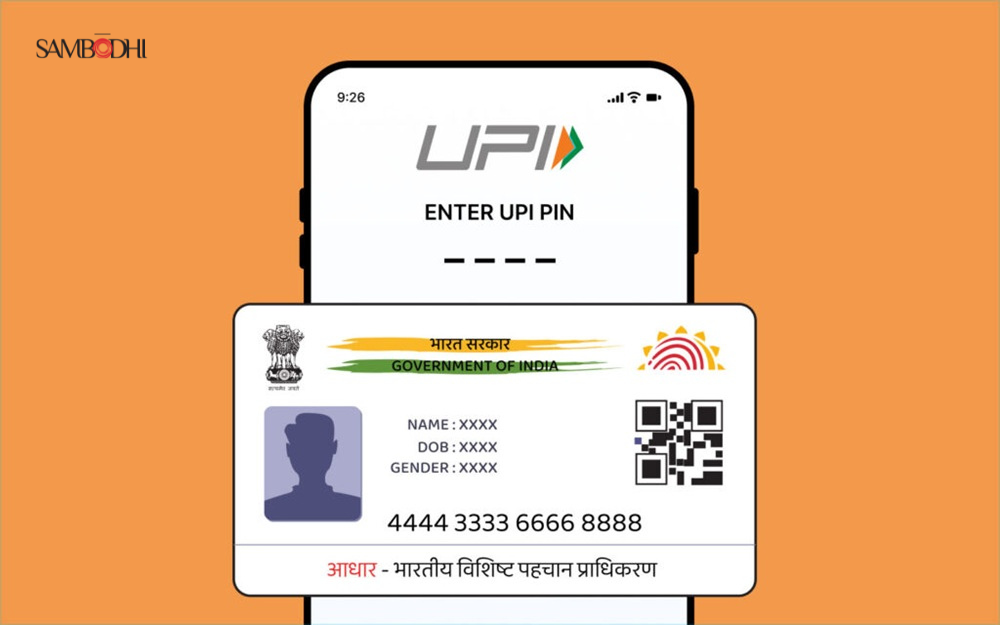
India’s social support system has long grappled with the challenge of reach. Subsidies and entitlements existed in plenty, but many never made it to the intended household. The system encountered multiple failures, which resulted in delayed payments and wrong beneficiary data delivery, damaging public trust in the system. Aadhaar-linked Direct Benefit Transfers (DBT) were introduced against this backdrop, meant to restore credibility by tightening delivery and cutting out layers of inefficiency.
The design is relatively simple. Benefits are credited straight into a beneficiary’s bank account. Aadhaar, as a biometric identifier, gives each transfer a traceable anchor. This reduces duplication and blocks diversion. This approach is part of a larger shift in governance, where digital systems are used not only to speed things up but also to make programs more accountable.
Since its rollout, adoption has grown quickly. By 2024, the DBT platform was carrying payments for more than 450 central schemes and over 700 state programs, moving a total of over ₹34 lakh crore. Beyond numbers, this marks a structural change: welfare spending is now tied far more closely to real individuals, shortening the distance between allocation and delivery.
The architecture rests on what has come to be known as the JAM trinity—Jan Dhan accounts, Aadhaar, and mobile connectivity. Each plays a role. Bank accounts expand coverage, Aadhaar authenticates identity, and mobiles help with communication and tracking. The rapid spread of Jan Dhan accounts was particularly significant. In 2014, fewer than half of households had one; by 2022, nearly all did. That expansion laid the foundation for digital transfers to function at scale.

Still, the system is not free of gaps. Aadhaar-based authentication requires fingerprint or iris scans and a working network. In states such as Jharkhand and Rajasthan, field studies have noted cases where biometrics did not match or connectivity dropped. For elderly people, for those with disabilities, or for families in remote villages, this can mean missed pensions or delayed rations. In practice, gains in efficiency sometimes come at the cost of access.
This is where support systems matter. Error correction, grievance redress, and last-mile facilitation need to be stronger. Without them, the people most dependent on state support risk being left out. Civil society and state governments have flagged this repeatedly. A technically sound system is not the same as a socially inclusive one. For example, in Odisha, Sambodhi worked with the World Food Programme to study how digitizing the Targeted Public Distribution System (TPDS) was changing the way benefits reached people. The shift to digital brought tangible improvements: lists of beneficiaries became cleaner, and monitoring the supply chain grew stronger; this kept leakages and errors at bay. But the study also underscored a constant truth: technology can accelerate processes and increase transparency, but it doesn’t always solve for inclusion. And without an effective mechanism for mirroring and supporting the last-mile of redress at scale, the poorest households could fall between the cracks. These reasons correspond to what would be observed in Aadhaar-based DBT: efficiency counts, but equity should be the lodestar.
The DBT model also shifts welfare in less visible ways. The direct money transfer system enables citizens to receive resources immediately. The PM-Kisan scheme delivers dependable financial support to farmers, which enables them to handle their seasonal costs. The direct cash transfers to women’s bank accounts through maternity benefit programs give them the ability to manage their financial resources. These examples show how welfare programs evolved from providing benefits based on supply to a demand-based system, which lets recipients choose their benefit distribution.
COVID-19 put this system to the test. During lockdowns, relief payments reached more than 320 million people within weeks. That speed was possible because the Aadhaar-linked DBT infrastructure was already in place. Global agencies noted the scale of the response. For other countries, the lesson was less about copying India entirely and more about adapting the idea to their own contexts of literacy, access, and trust.
The future of DBT in India will depend on whether it is embedded within a broader social protection net. Cash transfers alone cannot address the full range of welfare needs. Public support for healthcare, education, and nutrition assistance remains essential for the well-being of society. The DBT platform functions well as a structure, yet it must be supported by systems that are flexible in crises and functional in day-to-day operations.

The Aadhaar-linked DBT reform represents a major welfare transformation effort that stands as one of the most extensive in the Global South. It has improved transparency and saved money. But it also underlines a basic truth: efficiency is not enough without equity. Reimagining welfare delivery requires digital systems that are precise yet adaptable, and governance that balances fiscal discipline with social protection.
References
- https://dbtbharat.gov.in/
- https://uidai.gov.in/
- https://www.moneycontrol.com/news/business/direct-benefit-transfers-to-unprivileged-reaches-rs-34-lakh-crore-12382981.html
- https://www.livemint.com/economy/1100-out-of-1200-central-and-state-schemes-now-under-dbt-eliminating-middleman-says-fm-nirmala-sitharaman-11740816273197.html
- https://www.financialexpress.com/policy/economy-pm-jan-dhan-10-years-and-several-milestones-3594111/
- https://www.ndtv.com/india-news/aadhaar-has-led-to-rs-2-25-lakh-crore-savings-to-exchequer-says-uidai-ceo-report-2654862?
Raj Kashyap Das – Knowledge & Insights Coordinator, Sambodhi
