

Navigating the Gaps: Labor Laws and India’s Informal Workforce
26
Aug
Posted by: Raj Das
Category:
Inclusive Growth & Sustainability
No Comments
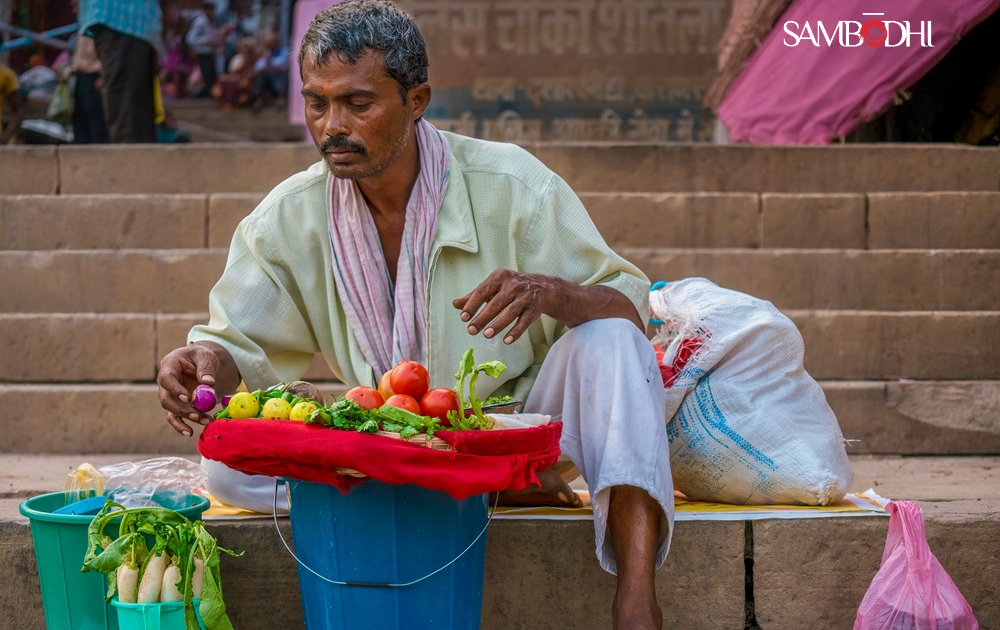
India’s workforce stands at a turning point. In the past two decades, while the economy has expanded and diversified, labor regulations haven’t kept pace with the realities of a predominantly informal workforce. Today, around 90 percent of the workers earn their livelihoods in informal settings, contributing to the country’s output but often without any legal contracts, job protections, or social benefits.
This disconnect between what the law guarantees and what workers actually receive has deepened existing inequalities and weakened productivity. This blog looks at why informal work continues to dominate India’s labor market, where current legal protections fall short, and how policies must shift to reach workers where they are, not where regulations imagine them to be.
The Scale and Nature of Informality

India’s informal economy spans across multiple sectors—construction, domestic work, street vending, agriculture, including even gig work. According to the Periodic Labor Force Survey (PLFS 2022–23), around 58.6 % do not have a written job contract, 46.8% are not eligible for paid leave, and 53.9% are not eligible for any social security benefits. Most informal workers earn below minimum wage thresholds, often working without written contracts, paid leave, or health benefits. Women, migrants, and Dalit workers remain disproportionately represented in these jobs, further compounding existing vulnerabilities.
Legal Framework: Structure without Reach
India’s legal architecture governing labor has long been fragmented. The introduction of the four Labor Codes (2019–2020) on wages, social security, industrial relations, and occupational safety marked a step toward simplification. However, the codes primarily focus on the formal sector and enterprises above a certain threshold of employees, leaving out vast sections of the informal economy.
Also, enforcement mechanisms are not robust. In fact, labor inspections have weakened over time, and compliance is more formal than real, leaving little recourse for informal workers.
Informal Work, Formal Exclusion
The most persistent challenge stems from the difference between legal rights and the actual inclusion of workers. The Building and Other Construction Workers Act of 1996 was launched to safeguard the most vulnerable segments of the workforce, but it failed to protect them effectively because registration was insufficient, and workers lacked awareness about benefits and the overall fragmented delivery of such benefits.
The e-Shram portal, launched in 2021 as a national database for unorganized workers, saw a total registration of over 30.68 cr unorganized workers, with women constituting 53.68% of registrations. But the project still faces challenges with user adoption and accurate data collection, and benefit delivery. This process of identification without integration fails to provide any meaningful protection in the long run.
The Transition Dilemma: Formalization vs. Protection
Policy efforts have often equated formalization with registration or tax compliance. However, the goal should not be mere formalization of enterprises but the extension of labor rights and protections to workers, regardless of the formality of their employer. Micro, small, and informal enterprises face genuine constraints for credit access, paperwork burdens, and regulatory costs, which disincentivize formal employment practices.
The implementation of coercive compliance strategies might drive these firms toward informal operations unless they receive incentives, capacity-building support, and simplified procedures.
Towards Inclusive Labor Regulation: Pathways Forward

Creating a more inclusive labor framework means starting from where workers actually are, not where the law assumes them to be. For millions in informal jobs, protection must begin with the basic access to health care, maternity benefits, and pensions, delivered not through rigid job contracts but as universal rights. Countries like Thailand and Brazil have shown that it’s possible to build such systems by putting people at the center, not just employers.
Equally important is making tools like e-Shram work better and turning it from a one-time registration drive into a live, digital backbone that connects workers to welfare schemes no matter where they live or move. For many migrants who cross state lines for work, portability of benefits isn’t a luxury; it’s a lifeline.
On the ground, local institutions like gram sabhas, municipal bodies, and worker groups need more say and more support. These are the first contact points for informal workers and can help make policies real, not just well-intentioned. At the enterprise level, especially for small and micro businesses, we need to stop assuming compliance comes only through penalties.
Instead, let’s offer something in return—tax breaks, credit access, and help navigating the paperwork, so fair practices become feasible, not burdensome. And lastly, any reform that leaves women behind is not a reform. Gender-responsive labor policies such as workplace safety standards, child care support, and flexible hours can help close the participation gap.
If the Indian economy is to be genuinely inclusive, our labor regulations must recognize the diversity, mobility, and vulnerability of its workers—not only in the legislation books, but in the lived experience.
A New Compact for India’s Workers

India’s economic goals need to be based on a visible workforce. A labor regime that protects only a small segment undermines both equity and efficiency. Reforming the system calls for a grounded understanding of how informal work actually functions. Labor laws must evolve from rigid frameworks of enforcement to mechanisms that enable inclusion.
But changing the law alone won’t be enough. What’s needed is a deeper shift—one that brings political commitment, reimagines how institutions serve workers, and places India’s most vulnerable laborers at the heart of a renewed social compact.
Raj Kashyap Das – Knowledge & Insights Coordinator, Sambodhi
