

Groundwater Scarcity in India: Navigating a Deepening Crisis
18
Aug
Posted by: Raj Das
Category:
Livelihoods and Natural Resources, WASH
No Comments

India, home to one-sixth of the global population, is quietly confronting an escalating crisis: groundwater depletion. Currently, the country is the world’s biggest consumer of groundwater, drawing around 250 cubic km a year, more than the United States and China combined. Over centuries, groundwater has been the bedrock of agricultural expansion and rural water security in India, but unsustainable extraction, worsened by policy distortions and fragmented institutions, is critically depleting many aquifers.
In this blog, we will talk about the evolution of underlying factors, regional dimensions, and policy dilemmas that caused this crisis in India.
Groundwater: The Unseen Engine of Rural Transformation
In our country’s rural economy, groundwater has been a silent foundation for decades. Water supply from groundwater sources supports 60 percent of irrigated agricultural land and provides drinking water to 85 percent of rural residents. The decentralized nature of groundwater supply was a key enabler of the Green Revolution by providing food security and reducing poverty for millions. However, excessive dependence on this system has made it extremely susceptible to failure. The Central Ground Water Board (CGWB) shows that 17 percent of Indian groundwater blocks are overexploited and 14 percent exist in critical or semi-critical zones.
Groundwater has remained unregulated throughout history because it is considered a private good that belongs to landowners. This lack of regulatory oversight has created uncontrolled competition for groundwater resources because users lack cooperative frameworks and usage guidelines to manage extraction rates and depths sustainably.
Regional Variations and Sectoral Pressures
Because the intensity of groundwater depletion is not uniform across the country, northwestern states such as Punjab, Haryana, and Rajasthan — the key contributors to India’s grain basket — have registered annual groundwater declines exceeding one meter. This pattern primarily results from extensive monoculture farming and persistent policy incentives favoring water-intensive crops like paddy and sugarcane. The eastern and northeastern states possess underused aquifers, and yet they face water quality problems; mainly due to arsenic and fluoride contamination. Furthermore, groundwater stress is not just regional but also urban-rural and intra-district, having created new zones of concern in peri-urban and industrial corridors.
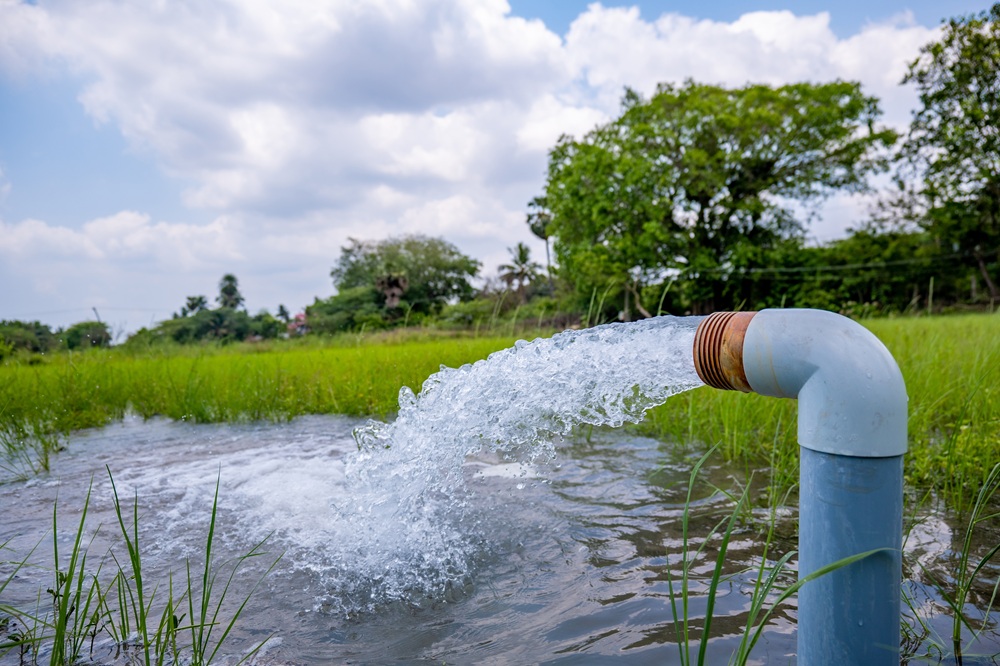
India’s groundwater economy is closely tied to its agricultural policy framework. Most Indian agricultural land uses crop patterns that do not match the local agroecological requirements. More than 60% of groundwater is used to irrigate only two crops: rice and wheat. These crops get benefits from disproportionate policy support through minimum support prices, procurement guarantees, and heavily subsidized power for irrigation.
Economic Consequences and Social Inequities
The economic implications of groundwater scarcity are far-reaching. This shrinking level of groundwater forces farmers to incur more monetary losses on deeper wells, additional pumping equipment, and energy consumption. Research shows that a one-meter decrease in groundwater levels results in a 9 percent reduction in agricultural production, which primarily affects small and marginal farmers. This decline threatens food security and rural income stability, ultimately weakening farming systems against climate change.
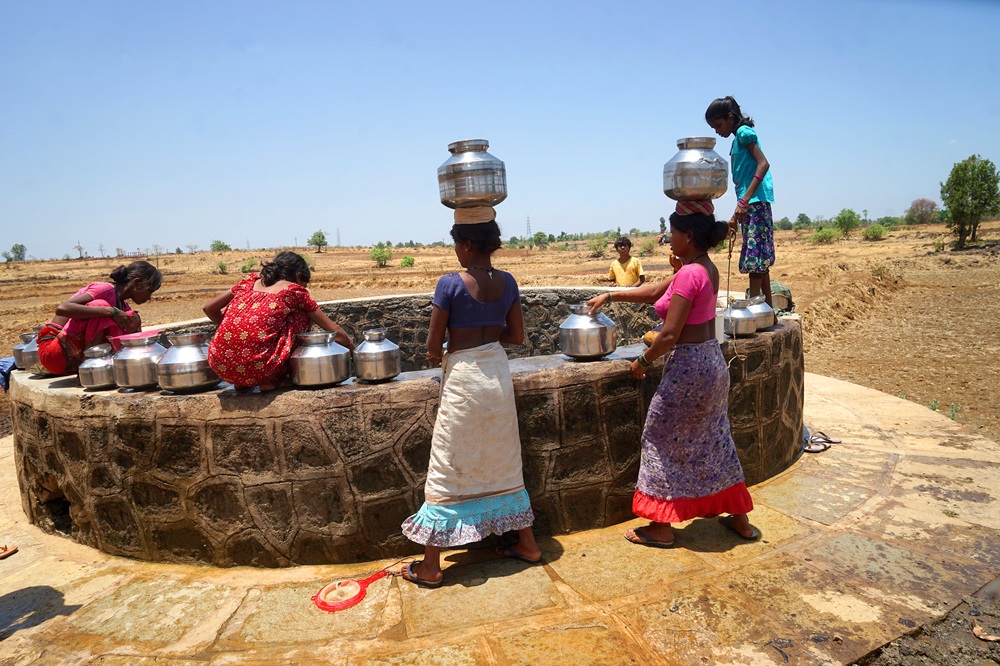
This growing water scarcity also makes existing social inequalities worse. Groundwater access depends on wealth and land ownership, enabling wealthy farmers with advanced infrastructure to maintain their pumping operations even when local aquifers reach depletion. The informal water markets become inaccessible to poor households who reside in arid and semi-arid areas. Rural women and girls, who are primarily responsible for collecting water, now face increased time burdens, physical exhaustion, and heightened health risks because of decreasing water resources and deteriorating water quality.
Institutional Challenges and Policy Gaps
In India, groundwater governance faces problems from both institutional fragmentation and regulatory inertia. The Constitution gives states control over water resources which leads to significant differences in policy implementation between regions.
The Model Groundwater Bill has been proposed multiple times since the 1970s, with its most recent version released in 2016, yet states have not adopted it. The current legal framework lacks any enforceable requirements for aquifer-level planning and groundwater licensing and usage restrictions. The lack of an institutional framework creates additional challenges because of insufficient data availability. The absence of complete real-time aquifer monitoring systems throughout the country prevents the creation of targeted interventions and the evaluation of policy effectiveness.
The development of technology-based solutions remains restricted to specific areas. Several states have launched successful programs to promote groundwater mapping such as sensor-based irrigation and digital monitoring systems. The Mission Kakatiya in Telangana and Jyotigram Yojana in Gujarat serve as examples of localized initiatives that focus on enhancing water-use efficiency. However, such initiatives are rarely well-integrated into an overarching national strategy. Remote sensing, geospatial analytics, and Internet-of-Things (IoT)-enabled water management tools remain underutilized in groundwater governance, despite their potential to transform decision-making.
Reimagining Groundwater Governance: Towards Sustainability
India urgently requires a sustainable management framework for groundwater that is built on core principles, underpinned by equity and resilience. The first step requires matching agricultural practices to local climate conditions and offering financial benefits to farmers who switch to water-efficient crops, including millet, pulses, and oilseeds. The reform of input subsidies, especially for electricity and fertilizers, serves as a vital tool to transform water consumption patterns while developing climate-resilient agricultural systems. At the institutional level, decentralization is key. The establishment of Water User Associations based on aquifers, together with local Panchayat empowerment for Participatory Groundwater Management (PGWM) enables both collective responsibility and accountability.
The groundwater value chain urgently requires technological integration. Investments in satellite-based aquifer monitoring with automated metering systems and AI-driven water accounting platforms can significantly enhance the accuracy and responsiveness of groundwater governance. The implementation of policy and legal reform should be a parallel priority as well. States need to bring in laws that match the Groundwater (Sustainable Management) Bill 2017 while mandating aquifer mapping, zoning, and the establishment of regulatory authorities with enforcement powers.
Confronting a Growing National Emergency
The groundwater crisis in India has evolved from a future threat into an active emergency that threatens not only the agricultural economy but also our nation’s water security and climate resilience. Failure to address aquifer depletion will create a development obstacle that primarily affects rural areas and climate-sensitive regions.
The current unsustainable path requires an integrated, comprehensive strategy to transform groundwater from private ownership into a shared, community-managed resource that operates within ecological systems. This transition needs powerful policy choices and long-term financial support to build a sustainable foundation for protecting India’s water future.
Raj Kashyap Das – Knowledge & Insights Coordinator, Sambodhi
