

eNAM and the Digital Marketplace: Rewiring Agricultural Mandis for the 21st Century
When eNAM was introduced in 2016, it did not transform agricultural markets overnight. Most mandis continued to function the way they always had: crowded yards, manual weighing, fragmented licensing, and limited awareness of prices outside the district.
What the platform did offer was a clearer framework for long-standing problems, built around digital registration, transparent bidding, and smoother information flow across states.
The system rests on three important layers. The first is a unified online portal where farmers, traders, and buyers register once and access multiple mandis. The second involves digital tools inside mandis, including electronic bidding, quality checking, weighing, and payment settlement. The third layer brings these pieces together through a national dashboard that links markets across states, shows real-time arrivals and prices, and enables buyers to source produce beyond their local geography. Together, these pieces were meant to shift the mandi network from isolated yards to a connected marketplace.
Progress has been steady, although uneven. By early 2024, government updates reported that 1,389 mandis across 23 states and 4 union territories were linked to eNAM. More than 1.78 crore farmers and 2.62 lakh traders had registered. Trade volumes had crossed 8.9 crore tons, with transactions worth over ₹3.19 lakh crore. Mandis that invested earlier in QC, connectivity, and digitized systems have seen the most online activity. States such as Karnataka, Uttar Pradesh, and Rajasthan have been ahead because their market boards built these systems years before eNAM expanded nationally.
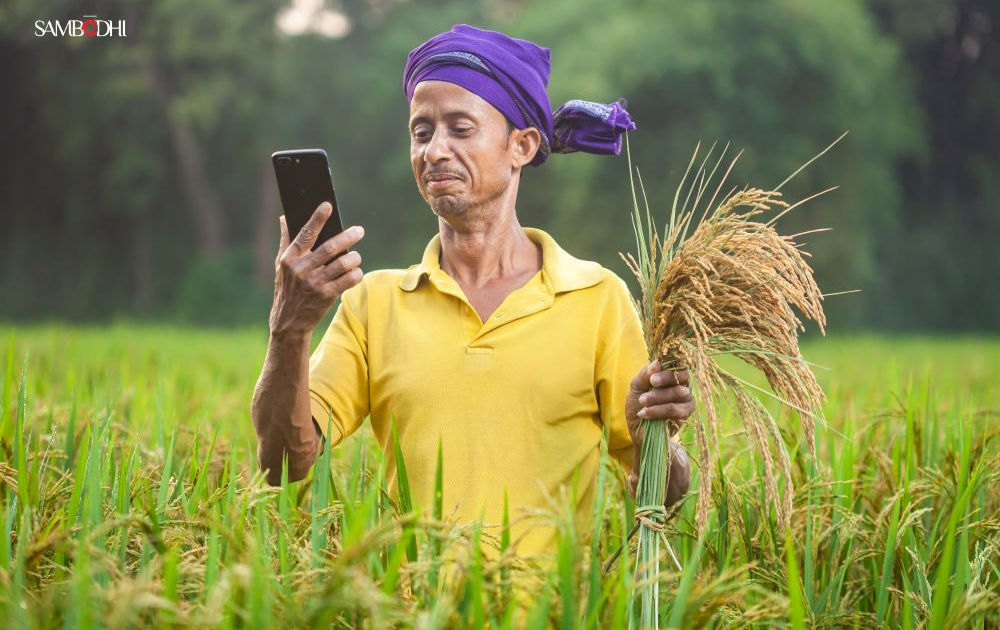
On the ground, the change is noticeable. A farmer arriving at an eNAM mandi can have their produce graded, listed online, and opened for bidding, where several buyers can view the lot. This reduces dependence on local agents and expands market reach. Many mandi officials point out that online bidding has increased transparency in price discovery, particularly for small farmers who have limited bargaining power. Digital payments sent directly to bank accounts also shorten settlement cycles and reduce disputes. arrival records reduce disagreements in the yard. A live dashboard of arrivals and prices helps traders plan movement across markets instead of relying solely on informal networks. Some mandis report better utilization of infrastructure, as buyers from nearby districts or states can access produce more easily. Over time, this can ease congestion and improve turnover, especially during peak harvest periods.
Still, the platform faces real operational challenges. Not every mandi has reliable QC units, and connectivity continues to be patchy in several rural locations. Many small and marginal farmers struggle with digital literacy and rely on commission agents even inside eNAM-linked markets. State-level Agricultural Produce Market Committee (APMC) reforms also differ, which affects trader participation, licensing, and fee structures. Perishable commodities have seen limited online trade because cold-chain systems and rapid logistics have not expanded at the same pace.
Looking ahead, the usefulness of eNAM will depend on how consistently states strengthen infrastructure, simplify mandi processes, and increase participation from farmers and traders. More mandis need fully functional assaying labs and digital bidding systems. Farmer-producer organizations must be supported so they can aggregate produce and negotiate better. Logistics and warehousing platforms will also need to integrate more closely so that price transparency leads to real gains in market access.
eNAM is slowly changing how agricultural markets function by making them more open and better connected. The direction is clear, but the change will hold only if day-to-day systems keep improving, from maintaining grading and digital tools to fixing connectivity gaps and helping small farmers and traders use the platform with ease. Much has already improved, yet the real test lies ahead as India learns how a national digital marketplace can support its farm economy in practical, lasting ways.
References
- Implementing the National Agriculture Market (e-NAM) Platform-PIB
- https://pib.gov.in/PressNoteDetails.aspx?NoteId=151386&ModuleId=3
- https://enam.gov.in/web/dashboard/stakeholder-data
- https://pib.gov.in/PressReleaseIframePage.aspx?PRID=2003183
- https://www.jetir.org/papers/JETIR1712233.pdf
- https://cqha.ca/blog/
Raj Kashyap Das – Knowledge & Insights Coordinator, Sambodhi
