

Making Public Data Work Together: The Next Frontier for India’s Digital Governance

Ask any government official in a district headquarters about their weekly review meetings, and they will likely describe a familiar and frustrating scene. One officer presents a report on health service coverage while another pauses, frowning at their screen because the nutrition database shows a completely different story. A third asks if the beneficiary list is current, only to find three different people holding three different versions from three different quarters. What was supposed to be a quick strategy session on improving maternal health or school attendance turns into a two-hour debate over whose spreadsheet is more real. Instead of discussing how to better reach the last mile, the room gets stuck trying to fix the math.
This is not just a minor technical glitch. It is the daily reality of how departments live with digital systems today. India has digitalized at a breathtaking pace through the India Stack and various e-governance initiatives, but each has its own clock, its own update cycle, and its own unique definitions of what an “active beneficiary” looks like. The irony is that this friction is not happening because we lack technology, but because of the choices made when these systems were first designed. A decade ago, the focus was on digitizing paper records within individual programs, standardizing formats, and moving files out of metal cabinets and into digital folders, not on building systems that could communicate across departments.
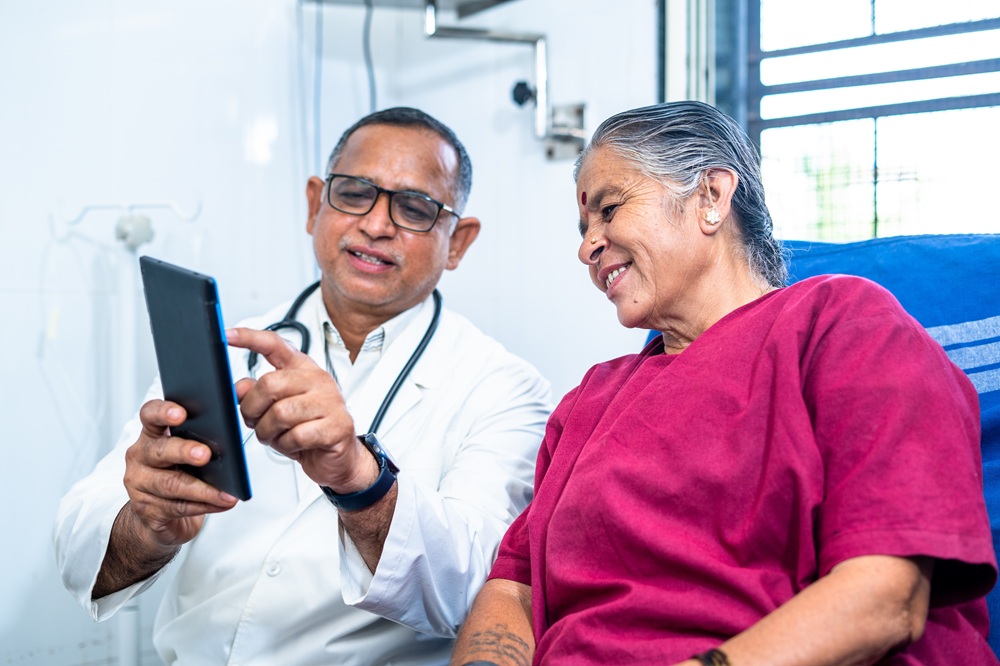
We can see the weight of this challenge most clearly in critical sectors like healthcare. Under the Ayushman Bharat Digital Mission (ABDM), the goal is to move away from a world where a patient has to carry a plastic folder full of old prescriptions and tattered lab reports every time they visit a new clinic. By creating a unified “digital health highway,” a doctor can, with the patient’s consent, see a longitudinal history of their care. This is not just a convenience for the patient; it is a fundamental shift for the administrator. When health data flows seamlessly, a state health secretary does not need to cross-check three different portals to see if a vaccination drive in a rural block is actually translating into lower fever rates in the local hospital. The data starts to tell a single, honest story.
A similar transformation is taking place in how we build our physical world. For years, India’s infrastructure projects were notorious for “siloed planning.” A road would be built, only to be dug up weeks later by the telecommunications department to lay fiber optic cables, or by the water board to fix a pipe. The PM Gati Shakti National Master Plan was launched specifically to end this expensive tug-of-war. By bringing over 1,614 data layers from more than 44 central ministries and all states onto a single GIS-based platform, planners can now see everything at once. They can see where a new railway line might overlap with a protected forest or where a gas pipeline could be aligned with a new highway. This integrated view has already helped identify over 150 critical infrastructure gaps, ensuring that taxpayers’ money is spent on building networks rather than fixing avoidable mistakes.
In the real world, life is not siloed. A child getting a vaccine recorded in a health database is the same child being tracked for a nutrition supplement in the Anganwadi system and school enrollment in the education portal. A family receiving a livelihood grant under a rural employment scheme is the same family listed in a housing or poverty survey. When these systems do not shake hands, the burden of connection falls on the people in the middle. District analysts and block-level officers spend their nights running manual cross-checks in Excel spreadsheets just to give their supervisors a coherent picture. This creates a trust gap where administrative efficiency goes to die. Even with the introduction of high-end dashboards, the daily experience for many remains a manual choreography. In many state offices, the trusted view is not the official portal export, but a consolidated file hand-stitched together by a team that downloads raw data from multiple sources and filters it themselves to find the truth.
The real challenge of making data work together is not actually the code, but the culture and policy of governance. Integrating data raises tough questions about institutional hierarchy. If two systems disagree, who has the final say on the truth? Which department is responsible when a merged record contains an error? Beyond the bureaucracy, there is also the constant, vital need to share information while keeping citizen privacy and security iron-clad. These are not just IT hurdles; they are the fundamental questions of modern statecraft. We are now seeing a shift toward a model where certain digital components are treated like public infrastructure, similar to roads or water pipes, that any department can plug into. This is the logic behind the “Data Governance Quality Index” and the push for “Digital Public Infrastructure” (DPI). The goal is to create a unified ecosystem where a single source of truth, such as a verified registry or a common identifier, can be used by everyone. This would allow an official to enter information once and have it be available everywhere it is legally permitted to be.
The impact of this shift on the ground would be transformative. When a district magistrate or a block development officer can look at a screen and know the numbers are already aligned across health, education, and social welfare, they stop being data janitors who spend most of their time cleaning records and start being genuine decision makers. They can finally look at a map and see that a specific village is lagging in both nutrition and school attendance, allowing for an integrated intervention rather than two separate, disjointed visits.
The next frontier for India’s digital journey is not just about collecting more data or building more apps. We already have plenty of both. It is about making that data a reliable partner rather than a source of stress. It is about turning friction back into flow so that the technology finally works as hard as the people using it. As we move through 2026 and beyond, the success of our digital governance will not be measured by how many portals we have, but by how well those portals talk to each other. This shift allows our governance teams to stop fighting with their screens and start spending their time generating the insights needed to serve the public better.
References
- Digital India-India Stack Global
- Ayushman Bharat Digital Mission
- Government of India Press Information Bureau
- Data Governance DMEO
- Institut Montaigne
Raj Kashyap Das – Knowledge & Insights Coordinator, Sambodhi
