

Role of HMIS Database in Indian Healthcare
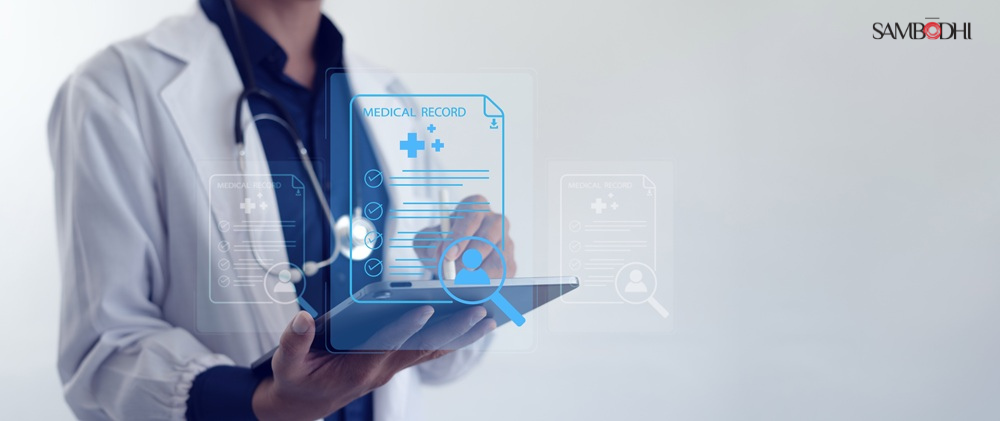
Since its introduction under the National Health Mission in 2008, the Health Management Information System (HMIS) has established itself as an essential element of India’s public health infrastructure. The system enables states and districts to transition from paper-based registers through its digital health record capabilities and standardized reporting formats, which provide real-time integrated monitoring. It collects data from more than 200,000 health facilities nationwide to build a comprehensive database of service delivery indicators, disease surveillance information, maternal and child health data, and resource allocation details. Initially, adoption was inconsistent, but continuous advancements in data collection and dashboard-based decision support have made HMIS an indispensable resource for program managers. The development of the HMIS Database system shows how data infrastructure enables public health systems to become more accountable while reducing inefficiencies and enhancing their response capabilities.
HMIS uses standardized reporting formats to collect service delivery data through more than 600 indicators. Facility staff, including Auxiliary Nurse Midwives (ANMs), staff nurses, and other health workers, use monthly formats to enter data, which is then consolidated at block, district, and state levels. The system uses a web-based portal to allow source-level data entry while successive levels perform validation. Its open-source design makes it flexible enough to link with platforms like the RCH Portal and the Mother and Child Tracking System, helping avoid duplicate records while the design focuses on scalability and interoperability to support both national and state-specific health priorities.
As India moved towards digitizing its infrastructure, new features like real-time dashboards, geographic mapping, and automated alerts were added to the HMIS, making it easier for program managers to track progress as well as respond quickly in times of intervention.
Applications and Use in Program Monitoring
HMIS functions as the primary performance monitoring system for health programs throughout all states. The portal-based monthly service delivery reports deliver detailed maternal and child health and family planning, and immunization coverage data to district health officials. Program managers study these datasets to spot performance trends and identify areas that may be lagging, so resources can be directed where they are needed most. It also helps officials track institutional delivery rates and monitor how expectant mothers are accessing antenatal care, allowing them to design targeted interventions.
Over the past decade, it has served as a tool to evaluate health-related Sustainable Development Goal (SDG) indicators. The standardized reporting structure creates a trustworthy evidence base that enables program implementation adjustments through mid-course corrections.
The Way Forward
Standardization, interoperability, and accountability must be the top priorities for HMIS to become a strong foundation of India’s health information architecture. The RCH portal, combined with the integration of the Health Facility Registry and electronic medical records, will unite existing silos to create a comprehensive population health picture. What HMIS needs now are stronger data validation protocols and automated entry checks to ensure reliable insights, along with sustained training and user-friendly digital tools to support frontline health workers.

The Ayushman Bharat Digital Mission will benefit from HMIS development into a real-time interoperable platform as India moves forward. It would enhance health data precision while supporting evidence-based policy decisions and resource distribution, leading to better health results for the community.
References
- Ministry of Health and Family Welfare (MoHFW) – Health Management Information System (HMIS) Portal
https://hmis.mohfw.gov.in - Ministry of Health and Family Welfare – HMIS: An Overview (2020)
https://mohfw.gov.in/sites/default/files/2858916361HMIS%20.pdf - Optimizing the Health Management Information System in Uttar Pradesh, India: Implementation Insights and Key Learnings
https://pmc.ncbi.nlm.nih.gov/articles/PMC9426977 - Public Health Information Systems for Primary Healthcare in India. Journal of Family Medicine and Primary Care, NCBI
https://pmc.ncbi.nlm.nih.gov/articles/PMC6881929 - World Bank – Assam: Improving Nutrition and Development Outcomes in Early Years
https://documents1.worldbank.org/curated/en/387501574135564291/txt/India-Assam-Improving-Nutrition-and-Development-Outcomes-in-Early-Years-State-Engagement-Report.txt - Government of India – Ayushman Bharat Digital Mission (2024), Wikipedia
https://en.wikipedia.org/wiki/Ayushman_Bharat_Digital_Mission - Evaluation of Computerized Health Management Information System for Primary Health Care in Rural India
https://pmc.ncbi.nlm.nih.gov/articles/PMC2996385/
Raj Kashyap Das – Knowledge & Insights Coordinator, Sambodhi
