Trusted data & technical advisors
We support governments, multilaterals, and philanthropies to generate and use evidence for stronger development strategies.
Harnessing evidence for resource-secure livelihoods
and a rising nation
We are trusted data and technical advisors who generate decision-grade evidence to help governments and institutions understand what works, why it works, and how to scale impact.
We support governments, multilaterals, and philanthropies to generate and use evidence to build impactful, inclusive, and sustainable development strategies. We bring a strong research DNA, working across livelihoods, inclusive growth, climate adaptation, skilling, education, global health, and capacity development, with a cross-cutting focus on women’s empowerment, democracy and human rights, resilience and risk reduction, and environment and sustainability.

We support governments, multilaterals, and philanthropies to generate and use evidence for stronger development strategies.

Research and evaluation across livelihoods, inclusive growth, climate adaptation, skilling, education, and global health.
Women’s empowerment, democracy and human rights, resilience, and environmental sustainability in every engagement.
We advance inclusive livelihood systems by integrating skill development, gender equity, natural resource stewardship, and economic empowerment into coherent pathways.
Measurement that supports decisions and helps troubleshoot challenges, from programme design to scale-up.
Evaluating policies and programmes at national and state level.
Impact and effectiveness assessments that show what worked and why.
Results measurement combining monitoring with geospatial analysis.
Evaluating large-scale programmes as they are implemented.
Rapid assessments, composite indices, ranking, and institutional assessments for state missions and community bodies.
Value-chain market assessments, landscape reviews, and sector analyses.
Analysis, learning products, and narrative research.
Technical support for programme investment, FCRA-compliant evaluations, and scale-up strategies.
Technical capacity building for MERL systems and teams.
We empower transformation across continents by working with local partners towards achieving global impact.
Across 25 Indian states and 7 union territories, plus Afghanistan and Tanzania.
Completed and ongoing studies combined.
Over 14 years of livelihoods work, from 2012 to 2026.
Select a state or territory to see its studies and engagement details.
Select a state to see our engagements
Select a state or territory. Hover or tap the map, or choose from the list.
State boundaries adapted from mapsvg.com (CC BY 4.0).
To philanthropies, governments, international agencies, social enterprises, academia, and other public and private organisations across the world.
A selection from our recent work across government, multilateral, and philanthropic partners.
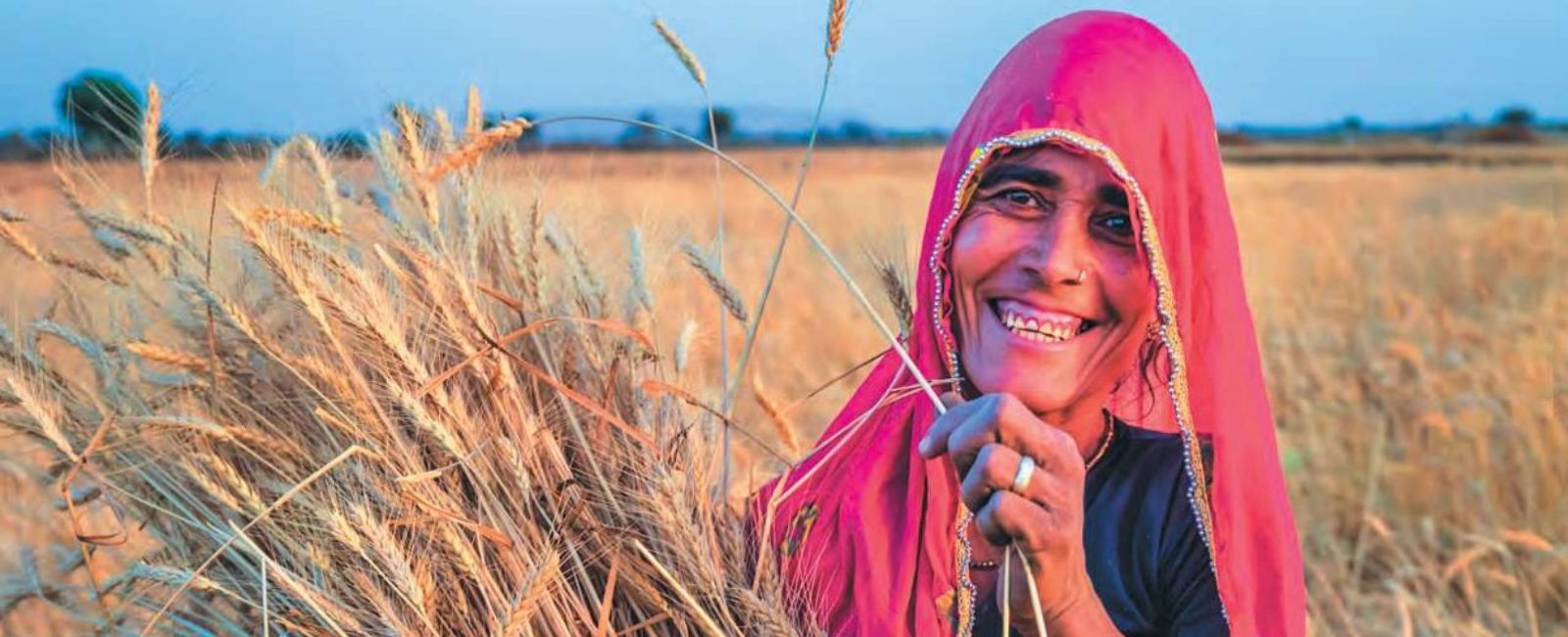
Empowering women entrepreneurs to earn a gross annual income of one lakh across three states.
Approach:Implementing a monitoring, evaluation, and learning (MEL) system for the Swayamshree Project.
Result:Process insights supporting women’s enterprise growth and income empowerment.
Digitization under the National Rural Livelihoods Mission across Punjab, Andhra Pradesh, Odisha, Rajasthan, Bihar, and Uttar Pradesh.
Approach:Assessment of implementation processes, user experience, and emerging challenges.
Result:Insights to inform future digitization efforts under NRLM.
Agricultural growth and rural enterprise development across Uttar Pradesh.
Approach:Establishing and supporting a dedicated Monitoring, Learning, and Evaluation Cell for the UPAGREES Project.
Result:Evidence and learning inputs to strengthen agricultural growth and rural enterprise development across the state.
Sector trends, scheme performance, and implementation practices across 11 states and one union territory.
Approach:Multi-state evaluation of five Centrally Sponsored Schemes in the Rural Development sector.
Result:Actionable evidence to inform future planning and programme improvements.
Expanding women’s livelihoods across Chhattisgarh and Jharkhand.
Approach:Monitoring, evaluation, and learning support for technical assistance to both State Rural Livelihood Missions.
Result:Progress and outcome assessments to strengthen women’s livelihood initiatives.
Institutional platforms for the poor to sustainably increase household income.
Approach:Multi-state impact evaluation survey of the National Rural Economic Transformation Project.
Result:Evidence on institutional effectiveness and household income gains.
Strengthening Gram Sabhas, Gram Panchayats, community participation, and local service delivery in Rajpur Block, Barwani.
Approach:Baseline and endline assessments alongside concurrent monitoring.
Result:Evidence on shifts in local governance, participation, transparency, accountability, and service delivery.
Diet diversity among women and children, household food security, nutrition, and complementary feeding in immersion sites.
Approach:Desk review, stakeholder consultations, evaluation framework development, and field-based data collection.
Result:Baseline evidence for tracking progress and informing future interventions.
MAVIM’s capacity to implement Gender Transformative Mechanisms for climate change adaptation.
Approach:Benchmarking against similar Centers of Excellence and assessing institutional strengths and gaps.
Result:Established baseline for indicators under the India results framework.
Dietary diversity among women and children, pregnancy-related practices, household food security, and complementary feeding across six blocks.
Approach:Mixed-methods baseline assessment across six blocks in Jharkhand.
Result:Identification of implementation gaps, strengths, and areas for improvement.
Diet diversity among women and children, household food security, and complementary feeding across three blocks in Wayanad and Palakkad.
Approach:Baseline study examining barriers and success factors influencing nutrition and food security.
Result:Evidence to inform future policy and intervention decisions.
Women’s engagement in local democratic structures, rights awareness, and SHG–government collaboration.
Approach:Mixed-methods baseline study of the PRI-CBO convergence intervention.
Result:Evidence on progress toward universalizing grassroots and local democratic collaboration.
Socio-economic outcomes under the National Rural Economic Transformation Project across nine Indian states.
Approach:Panel data covering 27,257 target households alongside village, SHG, VO, CRP, and CLF surveys.
Result:Evidence on the project’s impact on rural livelihoods and economic transformation.
Farm and non-farm enterprise profitability, household incomes, and livelihood opportunities for smallholder farmers, women, and youth.
Approach:Quasi-experimental, mixed-methods baseline assessment across Uttarakhand.
Result:Benchmark data to measure enterprise growth and household income changes.
Implementation bottlenecks and process fidelity under the National Rural Economic Transformation Project.
Approach:Concurrent field assessments, process mapping, diagnostic analysis, and mixed-methods inquiry.
Result:Timely evidence for course correction and programme improvement.
Off-grid solar lighting, solar home systems, and solar water heaters across five provinces.
Approach:Cross-sectional mixed-methods study covering 1,600 households and 20 KIIs and FGDs.
Result:Insights into consumer needs, price points, usage patterns, and market potential.
Livelihood, gender empowerment, governance, social inclusion, and ecological outcomes across Chhattisgarh, Jharkhand, Odisha, and West Bengal.
Approach:Mixed-methods evaluation combining quasi-experimental analysis, qualitative research, and remote sensing.
Result:Evidence on programme relevance, effectiveness, impact, and sustainability.
Household and enterprise conditions and women-led enterprise models across 16 districts of Maharashtra.
Approach:Baseline assessment for the Nav Tejaswini Maharashtra Rural Women’s Enterprise Development Project.
Result:Evidence to inform enterprise development and scaling pathways through Self-Help Groups.
Diet diversity among women and children, household food security, hygiene practices, and anemia in immersion sites.
Approach:Baseline study identifying contextual barriers and success factors.
Result:Strategies to strengthen implementation and replicate effective approaches.
Sustainable, natural, and regenerative agriculture in the Central India Tribal Region.
Approach:Mixed-methods, counterfactual longitudinal design covering smallholder farmers, FPOs, and market respondents.
Result:Evidence on sustainable agricultural practices and the factors shaping their adoption.
Livelihood conditions, women’s outcomes, and convergence between NRLM and MGNREGA.
Approach:Secondary and administrative data analysis combined with primary research.
Result:Evidence to inform solutions at the intersection of women’s empowerment and livelihoods.
Primary data on labour, unincorporated enterprises, and registered industries across all 35 districts.
Approach:Labor Force Survey across 700 FSUs, enterprise surveys across 35 districts, and ~8,107 registered industries.
Result:Validated, integrated analysis supporting District Domestic Product estimation in Assam.
Granular Gross Value Added and Gross State Domestic Product estimates across all 38 districts.
Approach:Primary data from ~75,000 formally registered enterprises combined with administrative datasets, digital dashboards, and capacity building.
Result:Strengthened methodology and data systems for state-level economic estimation.
Programme outcomes and causal pathways across Latehar, Lohardaga, and Gumla districts.
Approach:Longitudinal mixed-methods external evaluation.
Result:Evidence on which strategies to strengthen, adapt, or scale.
Health, nutrition, immunization, education, and livelihoods under SHG-led rural transformation.
Approach:Baseline and endline assessment across Bihar, Jharkhand, and Madhya Pradesh.
Result:Evidence on community-level changes to inform programme learning.
Institution building, food security, nutrition security, water security, and ecological security.
Approach:Primary and secondary research including a quasi-experimental evaluation design.
Result:Evidence on impact, causal pathways, and contribution to sustainable agriculture.
Changes across health, nutrition, immunization, education, and livelihoods in eight blocks of Madhya Pradesh.
Approach:Quasi-experimental Difference-in-Difference baseline, dipstick, and endline evaluations.
Result:Assessment of the multi-stakeholder approach to rural transformation.
Strengthening women’s leadership and political participation across mainland Tanzania and Zanzibar.
Approach:Evaluation of progress, relevance, sustainability, partnerships, resource use, and results.
Result:Documented best practices and lessons to inform future programming.
Results, impacts, sustainability, and resource effectiveness across AP, Telangana, Odisha, Karnataka, Rajasthan, and MP.
Approach:Baseline, midline, and final evaluations of the gender-responsive governance programme.
Result:Evidence and lessons learned to inform future gender-responsive governance initiatives.
Availability, reliability, affordability, quality, convenience, and safety of energy access in AP, Jharkhand, Rajasthan, and UP.
Approach:Multi-tier Tracking Framework survey covering 14,000 households, enterprises, service centers, and mini-grid operators.
Result:Tiered baseline evidence on energy access across four states.
Climate-resilient agriculture, water security, soil health, farm productivity, and crop diversification.
Approach:Impact evaluation combined with concurrent progress monitoring.
Result:Evidence for implementation improvements and policy learning.
Impact and adoption of laser levelers and Direct Seeded Rice in Karnal and Kurukshetra (with Dunar Foods, Tilda Riceland, and TechnoServe).
Approach:Quasi-experimental mixed-methods evaluation.
Result:Evidence on enablers, barriers, scalability, and sustainability of water-efficient farming.
Diet diversity among women and children, household food security, and complementary feeding in immersion sites.
Approach:Baseline assessment identifying contextual barriers and enablers.
Result:Benchmark data to inform future intervention planning and track progress.
Primary health and nutrition services and maternal and child health outcomes for Team Based Goal and Incentives.
Approach:Enumeration of 14,000 households, 1,500 household surveys, and 700 frontline worker interviews.
Result:Baseline evidence on the intervention’s potential to strengthen maternal and child health services.

Research, practice, and local partnership, brought together to strengthen systems and enable change at scale.
Evidence-led work grounded in the methods and rigour of academic research.
Geospatial analysis, machine learning, and digital dashboards for faster, precise insight.
Working alongside local partners to turn evidence into outcomes on the ground.